Product Knowledge
7U 8-GPU vs 4U 4-GPU Barebone: Which Format Fits Your AI Deployment?
7U 8-GPU or 4U 4-GPU barebone? Compare GPU density, cooling headroom, power per rack and cost per node to pick the right rackmount format for your AI deployment.
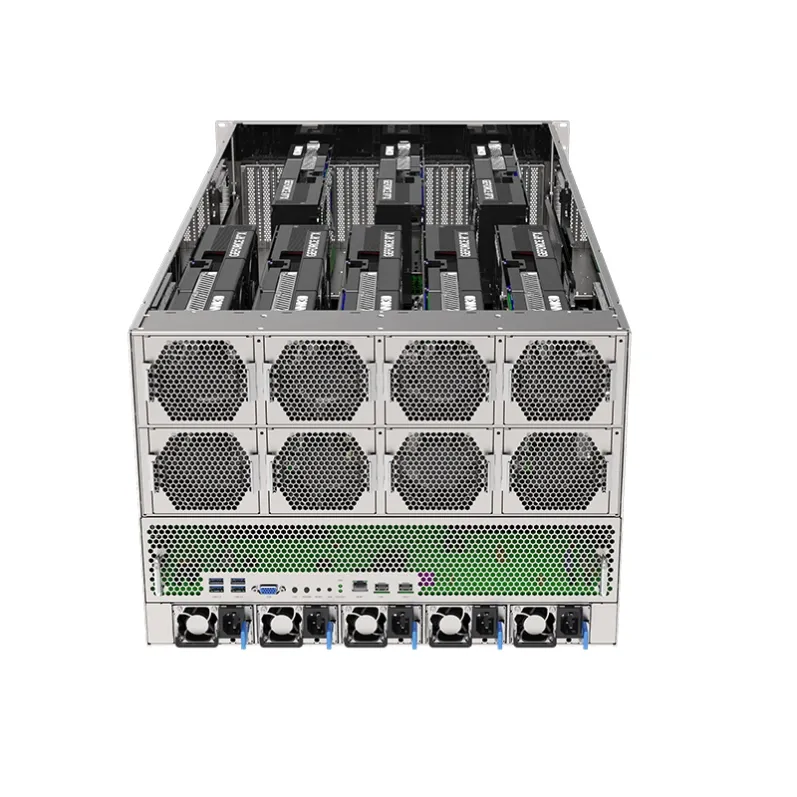
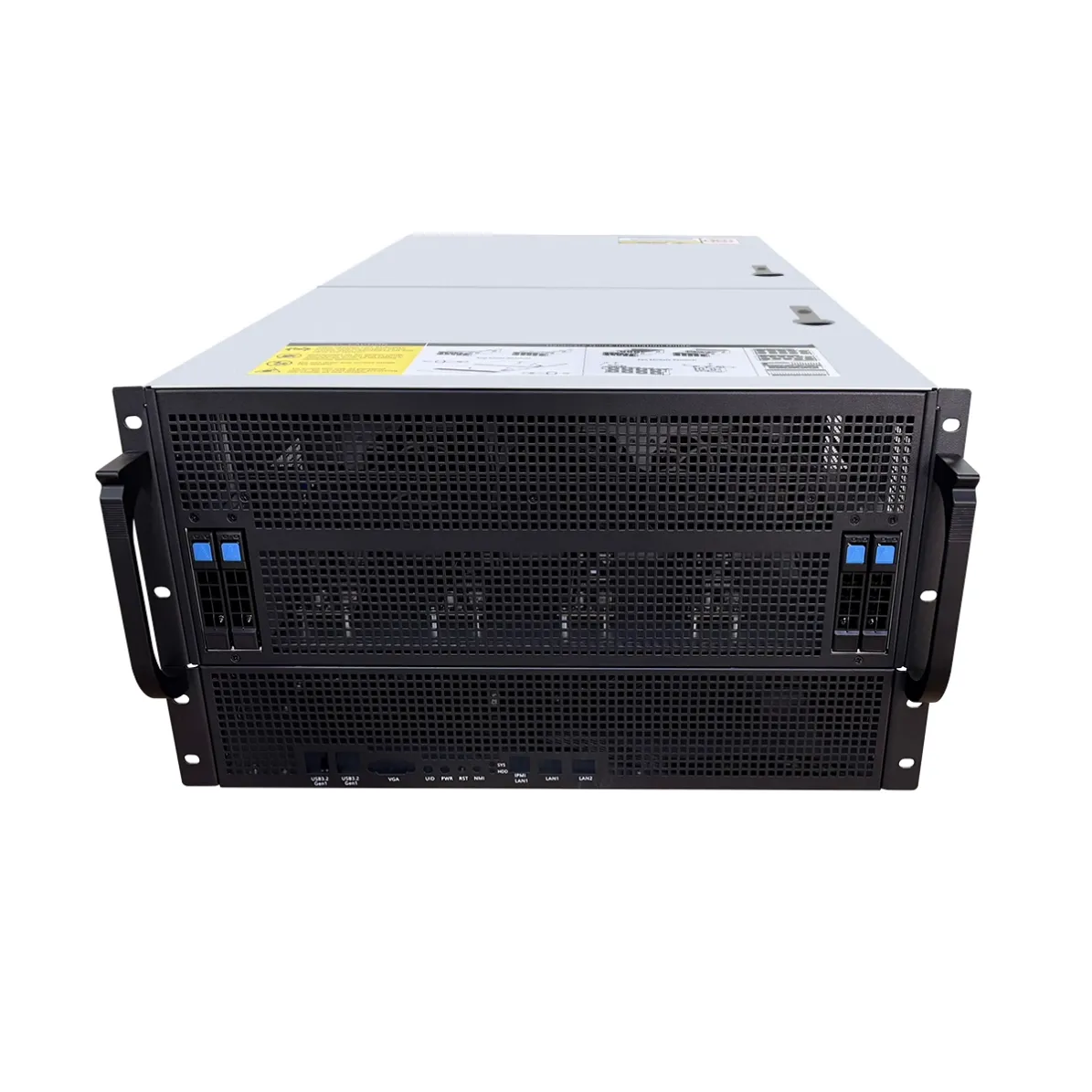
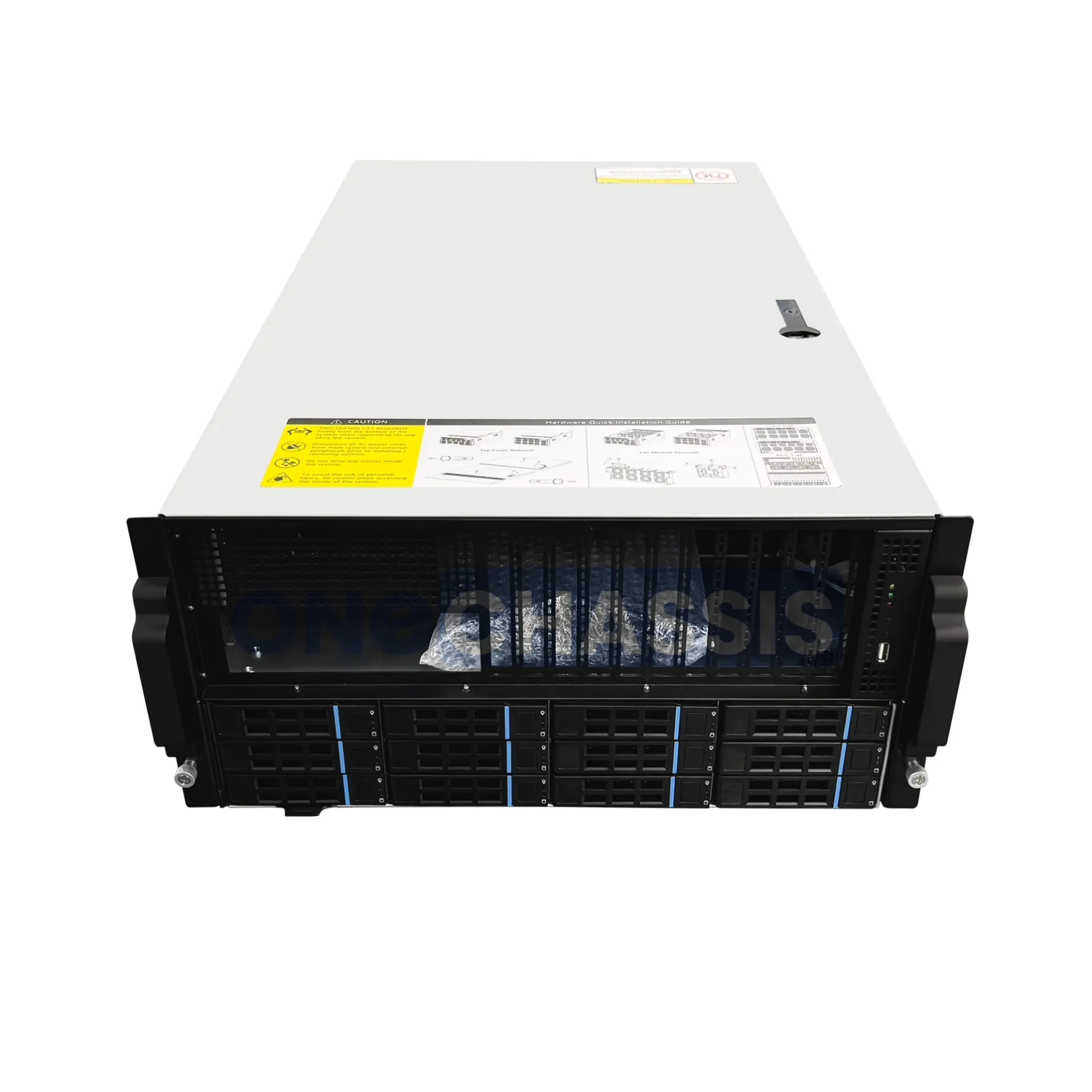
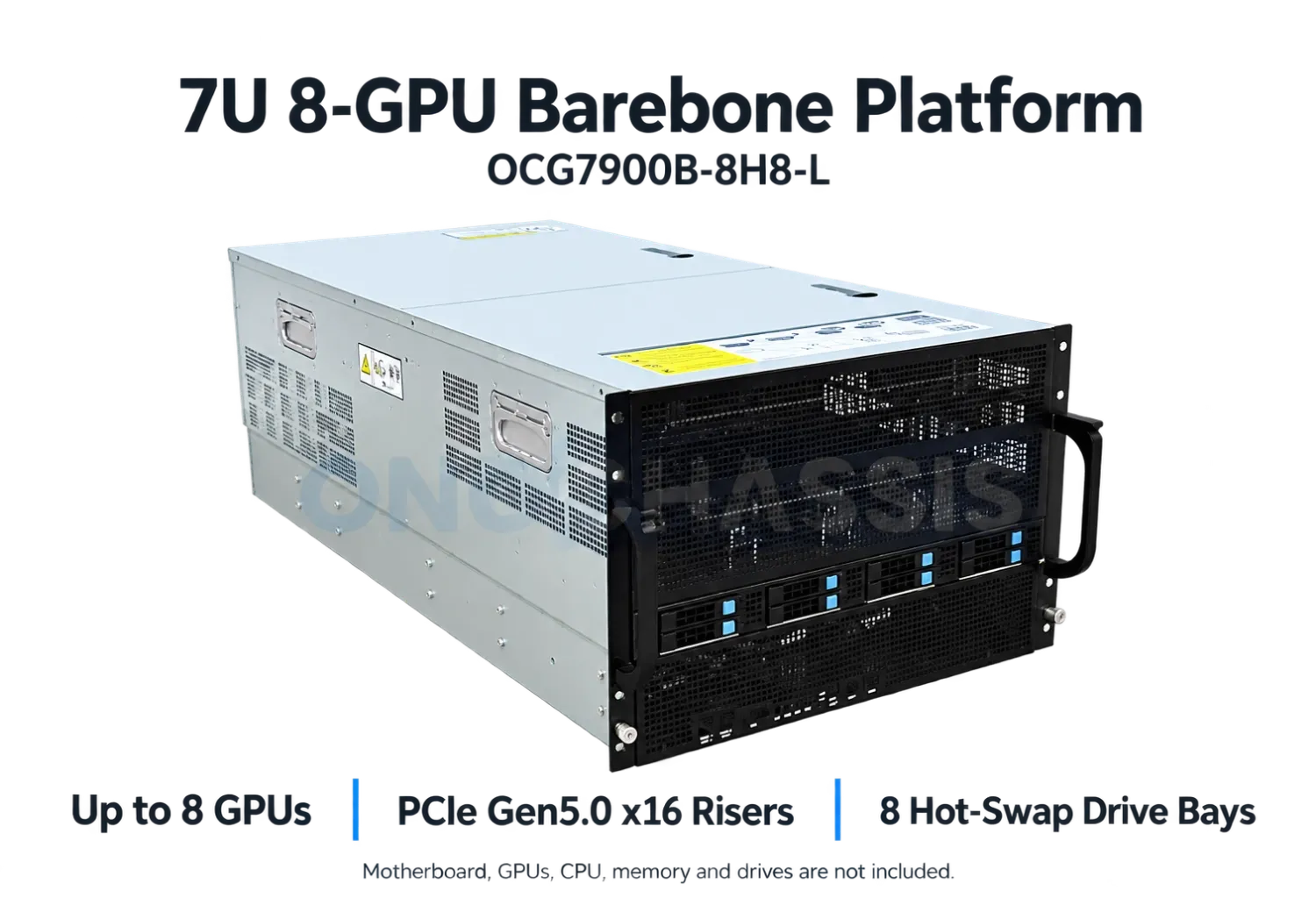
It is the most common platform question in AI infrastructure: build the cluster from dense 8-GPU nodes, or from smaller 4-GPU nodes? Both formats are proven. The right answer depends on your workload, your rack power budget and how your team operates the machines — not on which chassis looks more impressive.
GPU density per rack unit
The arithmetic surprises many buyers:
- A 4U 4-GPU node gives you 1 GPU per rack unit.
- A 7U 8-GPU node gives you roughly 1.14 GPUs per rack unit — only slightly denser.
So the 7U format is not mainly a density play. What the extra height actually buys is room: room for full-length, high-power cards, room for a larger redundant power configuration, and room for air to move. A 42U rack holds six 7U nodes (48 GPUs) or ten 4U nodes (40 GPUs) — but in most facilities the rack runs out of power and cooling long before it runs out of units, which is where the formats really diverge.
Cooling headroom
Eight GPUs at 450W each release about 3.6 kW of heat inside one chassis. The 7U format spreads that load across a much larger internal volume, with a bigger fan wall and straighter airflow paths. Cards run cooler, boost clocks hold longer, and fan noise stays manageable.
A 4U chassis with four cards at the same power level is working much harder per litre of air. It is entirely workable with blower-style (turbo) cards and a well-designed fan wall — this is why most 4U platforms are specified around dual-slot blower cards — but open-air cards or sustained full-load training in a warm room will expose the limits quickly.
Rule of thumb: the higher the per-card power and the longer the sustained load, the more the 7U format earns its size.
Power per rack
Concentrating GPUs concentrates power draw:
- One fully loaded 7U 8-GPU node can draw 4.5–5.5 kW. Six nodes in a rack approach 30 kW — beyond what many colocation racks are provisioned for.
- 4U nodes spread the same GPUs across more racks at lower kW per rack, which fits legacy facilities and standard colocation power allocations.
Check your per-rack power and cooling ceiling first. If the facility caps you at 10–15 kW per rack, smaller nodes across more racks are the practical answer. If you are building high-density AI halls, dense nodes plus a liquid cooling plan is the direction the industry is moving.
Workload fit
Choose 7U 8-GPU when:
- Training or fine-tuning large models, where 8 tightly coupled GPUs per node reduce cross-node traffic
- You standardize on one node type and scale by adding identical nodes
- Cards are high-power, full-length models that need the mechanical and thermal room
Choose 4U 4-GPU when:
- Inference, rendering or mixed workloads where jobs fit comfortably on 1–4 GPUs
- You rent or resell capacity per node and smaller nodes give finer pricing granularity
- Rack power is limited, or nodes must be distributed across sites
- You want lower cost per node and simpler handling — a 4U chassis is a two-person lift you can actually manage
The middle options exist for a reason
Between the two sit 5U (typically 5 GPUs) and 6U (up to 8 GPUs, including PCIe 5.0 platforms) formats. A 6U 8-GPU platform, for example, keeps the 8-card topology while trimming height for racks where every unit counts. When comparing quotes, compare at equal GPU count, equal redundant power and equal PCIe generation — format labels alone do not tell you what you are buying.
Bottom line
Pick 7U for maximum single-node capability and thermal headroom on high-power cards. Pick 4U for flexibility, lower per-node cost and facilities with modest rack power. And if your roadmap points to rising card power in the next refresh cycle, buy the format with headroom — chassis outlive the GPUs installed in them.
Not sure which format your project needs? Send us the GPU model, node count and your rack power limit — we will recommend a format from our 4U to 7U barebone range and confirm fit before you commit. Contact: sales01@gpubarebone.com